A casket is a specially designed container used to hold the deceased during funeral ceremonies, burial or cremation. It provides a dignified resting place and plays an important role in funeral arrangements.
For families in Malaysia, choosing a casket involves considering religious customs, cultural traditions, materials, prices and personal preferences. Understanding the available options can help families make a suitable decision during a difficult time.
This guide explains casket meaning, the differences between caskets and coffins, common types in Malaysia and important considerations when choosing one.
What Is a Casket? (Casket Meaning)
A casket is a container designed to hold the body of a deceased person during funeral services, transportation, burial or cremation.
The word “casket” originally referred to a decorative box used to store valuables, such as jewellery. Over time, it became associated with funeral containers, particularly in North America.
In Malaysia, the terms casket and coffin are commonly used interchangeably. Within the Chinese community, both may be referred to as 棺材 (guān cái). Caskets are available in different materials, shapes and finishes to accommodate religious traditions, funeral arrangements and family preferences.
Casket vs Coffin: What’s the Difference?
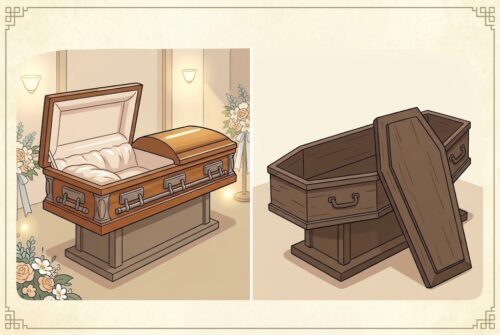
Although both serve the same purpose, caskets and coffins traditionally have different designs. A casket generally has a rectangular structure, while a coffin features a six-sided, tapered shape.
| Feature | Casket | Coffin |
| Shape | Rectangular | Six-sided, tapered |
| Lid | Full or split lid | Usually full-length lid |
| Interior | Often padded and fabric-lined | May feature simpler lining |
| Price | Depends on material and design | Depends on material and craftsmanship |
| Usage | Modern funeral services | Traditional funeral services |
In Malaysia, both designs are used. Rectangular caskets are common in modern funeral services, while traditional Chinese funerals may feature larger wooden coffins. However, the choice ultimately depends on religious customs, budget and family preferences.
Types of Caskets in Malaysia
Different casket materials and designs are available in Malaysia. Each offers distinct characteristics, making it important to consider the intended funeral arrangements.
1. Solid Wood Caskets
Solid wood caskets are made primarily from natural timber and are often chosen for their traditional appearance, natural grain patterns and sturdy construction.
They are available in various colours, finishes and decorative styles, ranging from simple polished surfaces to elaborate carved designs.
Solid wood caskets are commonly considered for burial, although certain models may also be suitable for cremation if they meet the crematorium’s requirements.
2. Wood Veneer and MDF Caskets
Wood veneer and medium-density fibreboard (MDF) caskets are alternatives to solid wood models.
These caskets use engineered wood materials and may feature a decorative wood-grain finish. They are generally more affordable than premium solid wood options while maintaining a presentable appearance.
Some models are suitable for cremation, provided their construction materials and coatings comply with crematorium regulations.
3. Metal Caskets
Metal caskets are commonly made from steel, stainless steel or other metals. They feature durable construction, decorative handles and various finishes.
They are primarily intended for burial rather than cremation because metal construction is unsuitable for standard cremation procedures. Families should check cemetery requirements before selecting a metal casket.
4. Traditional Chinese Caskets (棺材)
Traditional Chinese caskets hold cultural significance in Malaysian Chinese funeral ceremonies.
Historically, these coffins were often constructed from substantial wooden sections, sometimes featuring rounded profiles, decorative carvings and symbolic details.
Depending on family traditions, casket selection may involve guidance from elders or religious representatives. However, many modern Chinese families prefer simpler designs while maintaining meaningful funeral customs.
5. Eco-Friendly and Cremation Caskets
Eco-friendly caskets are designed using materials with greater consideration for environmental impact.
Depending on availability, these may include responsibly sourced wood, cardboard, bamboo or other biodegradable materials.
Cremation caskets must meet the selected crematorium’s requirements, particularly regarding combustible construction and restricted metal components. Families should confirm material suitability before making their selection.
How Much Does a Casket Cost in Malaysia?
The price of a casket in Malaysia typically ranges from RM1,200 to RM15,000 or more, depending on its material, construction, size, design and finishing.
Basic engineered wood caskets are generally more affordable, while premium solid wood and traditional Chinese caskets tend to cost more due to their materials and craftsmanship.
Below is an estimated breakdown of casket prices in Malaysia based on publicly available market information.
| Casket Type | Estimated Price (RM) |
| Basic MDF / wood veneer casket | RM1,200–RM2,000 |
| Standard wooden casket | RM2,000–RM5,000 |
| Mid-range wooden casket | RM5,000–RM10,000 |
| Premium solid wood casket | RM10,000–RM15,000+ |
Note: These are estimated market prices, not Hong En Life’s official casket prices. Actual costs vary depending on the supplier, materials, availability and customisation.
Several Factors Influence Casket Prices
- Material & construction: Solid wood, engineered wood and metal have different manufacturing costs. Premium hardwoods such as Merbau and Chengal generally cost more due to their material quality and craftsmanship.
- Design & finishing: Decorative carvings, polished surfaces, premium lacquer finishes and intricate detailing can increase the overall cost.
- Casket size: Larger or specially sized caskets may require additional materials and customisation, resulting in higher prices.
- Interior lining: The quality of fabric, cushioning, handles and decorative accessories can also affect the final price.
- Funeral arrangements: Caskets intended for cremation are generally simpler, while burial caskets may feature heavier construction or more elaborate designs.
Some funeral providers include a standard casket in their funeral packages, while others offer premium models as upgrades.
Families should request an itemised quotation to understand what is included, whether additional charges apply and which casket options suit their budget and funeral requirements.
Choosing a Casket for Cremation vs Burial
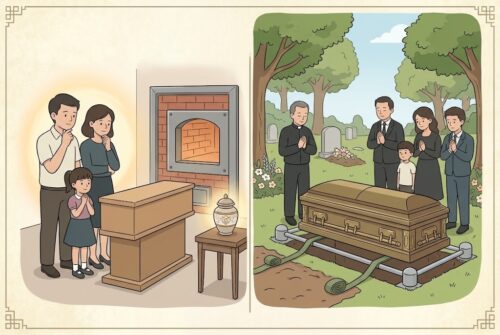
Whether the deceased will be cremated or buried is an important factor when choosing a casket. Each arrangement has different practical and material requirements.
Caskets for Cremation
Cremation caskets must be suitable for placement inside a cremation chamber.
They are generally made from combustible materials, such as approved wood or engineered wood, and should not contain prohibited metal fittings or hazardous components.
Before selecting a cremation casket, families should confirm its material, dimensions and compliance with crematorium requirements.
After cremation, the remaining ashes are collected and placed in a suitable urn or container for their final resting place. Learn more about the process through our Cremation Services in Malaysia guide.
Caskets for Burial
Burial caskets are placed in a designated burial plot together with the deceased.
Depending on family preferences and cemetery regulations, options may include solid wood, engineered wood or metal caskets.
Families should consider the burial plot dimensions, casket material, handling requirements and any restrictions imposed by the cemetery. For more information, explore our Burial Services in Malaysia page.
Casket Customs by Religion in Malaysia
Religious beliefs and cultural traditions influence how caskets are selected and prepared during funeral ceremonies in Malaysia.
Chinese Taoist and Folk Traditions
In Chinese Taoist and folk-religion funerals, caskets may symbolise filial piety, ancestral remembrance and respect for the deceased.
Traditional ceremonies can involve preparing the deceased, selecting an auspicious time for encoffining, conducting prayers and arranging symbolic offerings. Specific customs differ according to dialect groups, family traditions and religious practices.
Buddhist Funeral Customs
Buddhist funerals often emphasise compassion, impermanence and prayers for the deceased.
An important ceremony in some Chinese Buddhist funerals is encoffining (入殓), when the deceased is respectfully placed inside the casket.
The ceremony may involve cleansing, dressing, chanting and prayers before the final farewell. Learn more about these practices in our Traditional Buddhist Funeral Guide.
Christian Funeral Customs
Christian funeral services generally focus on remembrance, prayer and faith in eternal life.
Rectangular wooden caskets are commonly associated with Christian funerals. Services may include scripture readings, hymns, prayers and family tributes before burial or cremation.
Customs vary between Catholic, Protestant and other Christian communities. Read our Christian Burial Practices in Malaysia guide for more information.
Hindu Funeral Customs
For many Hindu families in Malaysia, cremation is the customary method of final disposition. The deceased may be placed on a bier or in a suitable cremation container rather than an elaborate casket.
Traditional arrangements can involve washing and dressing the deceased, performing prayers and completing final rites before cremation.
Practices differ by community and family tradition, so consultation with religious representatives is advisable.
How to Choose the Right Casket in Malaysia
Choosing a casket involves balancing practical requirements, cultural traditions and personal preferences. Consider the following factors:
- Set a suitable budget: Determine how much your family is comfortable spending. Ask for an itemised quotation and confirm whether the casket is included in the funeral package.
- Consider religious and cultural customs: Select a casket that accommodates your family’s religious traditions. Funeral professionals or religious representatives can provide guidance where necessary.
- Confirm cremation or burial: The final disposition determines which casket materials are appropriate. Check crematorium or cemetery requirements before confirming your choice.
- Respect the deceased’s wishes: If your loved one expressed preferences regarding their funeral, consider those wishes when selecting the casket and arrangements.
- Check availability and preparation time: Standard models may be available promptly, while specially sized or customised designs may require additional preparation. Confirm the availability before scheduling funeral ceremonies.
Ultimately, the most suitable casket is one that provides a respectful farewell while meeting the family’s practical, cultural and financial needs.
Arrange a Dignified Farewell with Hong En Life
Choosing a casket is a personal decision that reflects your loved one’s wishes, religious traditions and funeral arrangements.
At Hong En Life Bereavement Care, we help families understand their options and arrange meaningful Buddhist, Taoist, Christian and other funeral services with compassion and respect.
Whether you require assistance with casket selection, cremation, burial or alternative arrangements such as flower burial and sea burial, our team is here to provide guidance.
To learn more, you can explore Hong En Life funeral services and packages or contact Hong En Life at (017-808 2616) for personalised assistance.