In Malaysia, the Chinese community has preserved a rich and relatively complete set of traditional cultural practices. Among them, Malaysian Chinese funeral customs are especially unique, blending ancestral traditions, religious beliefs, and local practices into a system that is both solemn and highly ritualistic.
For many families, a funeral is more than just a farewell—it is a continuation of ancestral heritage. From mourning attire and vigil practices to various taboos and rituals, these customs reflect the deep respect placed on life, filial piety, and honoring the deceased. Understanding these Chinese funeral traditions can help families navigate the process more calmly when facing the loss of a loved one.
Mourning Attire & Colors: Traditional Significance by Relationship
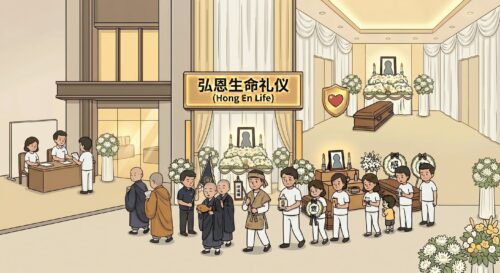
In traditional Chinese funeral customs, mourning attire and colors represent the relationship and generational hierarchy between the family members and the deceased. Different relatives wear different colors or styles to express their grief.
The most traditional mourning attire is hemp clothing or plain white garments, typically worn by immediate family members such as children. Hemp symbolizes simplicity and mourning, reflecting the deep sorrow felt by children for their parents. In more traditional Malaysian Chinese funerals, the eldest son or main family members may also wear mourning sashes or headbands made of hemp cloth to demonstrate filial piety.
Besides white, other colors may be used based on hierarchy:
- White: Immediate family members (children or closest relatives)
- Blue or green: Grandchildren or younger generations
- Red elements: In some traditions, young children may wear red for protection and to ward off negative energy
However, in modern funerals, many families opt for simple black or neutral-colored clothing to maintain a respectful and unified appearance. Ultimately, the choice of attire depends on family traditions and religious practices.
Wake & Vigil Practices: Meaning of the Wake and Eternal Light
In many Malaysian Chinese funerals, holding a wake (vigil) is an important part of the process. The vigil usually begins when the funeral altar is set up and continues for several days until the funeral.
Family members take turns staying by the altar, symbolizing their companionship and devotion to the deceased. It is also a way of fulfilling filial duties.
During this period, an eternal light (long-burning lamp) is typically kept on. In traditional belief, this light serves to guide the deceased on their journey to the afterlife, while also symbolizing continuity of life and family lineage.
Friends and relatives will visit during the wake to pay their respects. They may offer incense, bow, or present flowers as a sign of respect, while also supporting the grieving family. For many, this period is not only about rituals but also a time for remembrance and shared mourning.
Common Taboos in Malaysian Chinese Funeral Customs
Traditional Chinese funeral customs also include various taboos, many of which stem from long-standing beliefs and generational practices. While they may vary slightly by region, they are still commonly observed in Malaysian Chinese society.
For example, some families advise that pregnant women and young children avoid going near the wake. Traditionally, they are considered more sensitive, so elders recommend limiting their exposure. In modern times, this is often seen more as a precautionary custom rather than a strict rule.
Another common belief is that pets such as cats and dogs should not go near the coffin. In folklore, if an animal jumps over the coffin, it is considered inauspicious. Therefore, pets are usually kept away during the wake.
Other general taboos include:
- Avoid making loud noises at the wake
- Avoid wearing bright or flashy clothing
- Follow proper mourning etiquette when paying respects
At their core, these practices aim to maintain solemnity and show respect to the deceased.
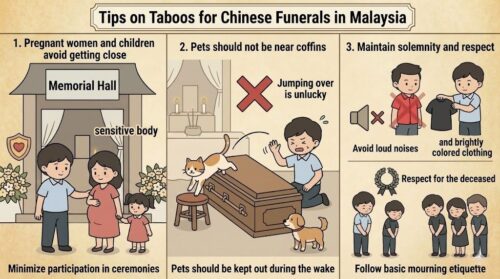
Tips on Taboos for Chinese Funerals in Malaysia – Hong En Life
Simplifying Traditional Practices
Malaysian Chinese funeral customs involve many rituals and cultural details. For families experiencing a funeral for the first time, the process can feel overwhelming and difficult to manage.
In reality, the essence of these traditions lies in honoring the deceased and preserving filial values.
If you wish to respect traditional Chinese funeral customs while ensuring a smoother and more reassuring process, engaging a professional funeral service provider can be a practical choice.
Complex traditions made simple—Hong En Life (弘恩生命礼仪) is here to assist you. With years of experience, our professional funeral team is well-versed in Malaysian Chinese funeral customs and various ceremonial processes. From altar setup to ritual arrangements, we ensure every detail is handled with care and respect, allowing you to focus on spending meaningful time with your loved ones.
Contact Hong En Life funeral consultants (017-808 2616) to learn more or get a customized funeral arrangement plan.