In the Malaysian Chinese community, attending a funeral is always treated with a lot of respect and seriousness. At the end of the day, we go to pay our respects to the deceased and to show support for the family.
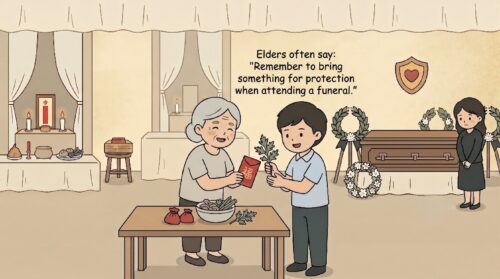
But if you’ve ever told an elder you’re attending a funeral, you’ve probably heard something like:
“Remember to bring something for protection.”
It might sound a little superstitious at first, but for many people, it’s less about belief and more about peace of mind. These small habits have been passed down for generations — a way of showing respect for life, death, and everything in between.
If you’re not sure what to prepare, here’s a simple, real-world guide based on common practices among Malaysian Chinese families.
So… What Do People Usually Bring?
Different families have slightly different customs, but these are some of the more common and easy things people do:
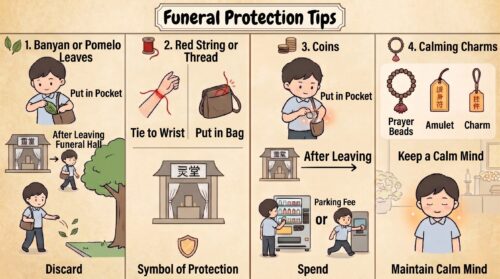
1. Banyan Leaf or Pomelo Leaf
This is probably one of the most “classic” things elders recommend.
Some people will tuck a small leaf (usually banyan or pomelo) into their pocket before going to the wake. Traditionally, these leaves are believed to have “cleansing” properties.
You don’t need to do anything special — just keep it in your pocket or bag. After you leave the funeral, you throw it away. The idea is simple: whatever “heavy energy” you might have picked up, you leave it behind instead of bringing it home.
Some people even drop the leaf under a tree on the way back, symbolically returning it to nature.
2. A Red String or Something Red
In Chinese culture, red is associated with protection, positivity, and strong “yang” energy.
Because of that, some people wear a red string on their wrist, while others just carry something red — like a small cloth, bracelet, or accessory.
These days, younger people don’t always wear it visibly. It could just be something small in your bag. The point isn’t how you do it — it’s more about feeling a bit more at ease.
3. A Few Coins
This is another small but common habit.
Some elders will suggest carrying a few coins when attending a funeral. Metal is believed to help “stabilize” energy.
After leaving, people often spend the coins — maybe on a drink, parking, or something small — or simply discard them. Symbolically, it means you’re not bringing anything from the funeral back home.
Not everyone follows this, but it’s still quite common in many households.
4. Personal Comfort Items (Amulets, Prayer Beads, etc.)
Nowadays, people also bring things that are meaningful to them personally.
It could be:
- An amulet
- Prayer beads
- A small pendant
For some, it’s tied to religious beliefs. For others, it’s just something that helps them stay calm.
Honestly, it’s less about the object itself and more about grounding yourself emotionally. Funerals can feel heavy, and having something familiar can make it easier to handle.
Funeral Protection Tips – Hong En Life
What About After the Funeral?
Besides what you bring, there are also a few common “after” practices people follow:
1. Washing Hands (Sometimes with Flower or Pomelo Water)
At many wakes, there’s water prepared at the exit.
People will rinse their hands or lightly touch their face before leaving. It’s a symbolic way of “washing off” the heaviness and returning to normal life.
Even people who don’t strongly follow traditions often still do this — just out of respect.
2. Not Going Straight Home
You might hear elders say: don’t go straight home after a funeral.
Some people stop by a mall, a coffee shop, or just walk around somewhere busy for a while. It’s seen as a way to “reset” before heading back.
Whether or not you believe it, many still follow this as a habit.
3. What to Do with the “Token” (吉仪 / Ji Yi)
Sometimes, the family will give a small red packet when you leave. It usually contains a coin or a sweet.
Common practice:
- Spend the coin soon
- Eat the sweet
- Throw away the red packet
The idea is the same — don’t bring it home as-is.
Honestly, The Most Important Thing Isn’t All This
You don’t have to follow every single custom perfectly.
At the end of the day, attending a funeral is about:
- Paying respect to the person who passed
- Being there for the family
These small traditions are just ways people find comfort and reassurance. If you do them, great. If not, it’s okay too. What matters most is showing up with sincerity.
If You’re Feeling Unsure — That’s Normal
A lot of people feel nervous about “doing the wrong thing” at funerals, especially if they didn’t grow up with these customs. But really, just keeping things simple, respectful, and sincere is more than enough.
And if you or your family are ever in the position of arranging a funeral and need guidance, working with an experienced team can make a huge difference. For example, Hong En Life specializes in Malaysian Chinese funeral traditions and helps families manage everything with care and respect.